There is a week in late September when the light turns the colour of weak tea and the air starts to smell of damp leaves. That is the moment to begin moving the season indoors — slowly, room by room, rather than in one frantic Saturday afternoon.
Autumn rustic decor works best when it looks gathered rather than bought. A pine board here, a wire basket there, a wool throw over the arm of a chair that has felt cold all summer. The materials do the talking: wood, wool, stone, linen, tin and wire. Everything else is arrangement.
Start With Texture, Not Colour
You can make a room feel like October without changing a single colour in it. Swap cotton cushion covers for wool or tweed. Replace a glass lamp base with turned wood or a chunk of stone. Put a linen runner under a wooden bowl and the whole surface reads warmer.
Layering is the trick, but keep count. Three textures on one surface is usually plenty; five looks like a jumble sale. A wooden bowl of pine cones on a linen cloth works. The same bowl on a plastic tablecloth does not.
Cold floors are the quickest fix in any older house. A wool rug, even a small one beside the sofa, changes how a room feels underfoot. If you have a chair with a wooden seat, a sheepskin does the same job for your shoulders.
Fast texture swaps
- Cotton cushion covers for wool, tweed or corduroy.
- Glass vases for earthenware jugs and old tin cans.
- Thin summer curtains for lined linen or a heavier weave.
- Ceramic pots for terracotta, stoneware and unglazed planters.
Warm the Palette Without Going Full Pumpkin
Autumn colours have a reputation for shouting, and much of that comes from plastic. Choose three tones and repeat them through the room: ochre, rust, moss, oatmeal, charcoal, faded terracotta, a deep oak brown. Let the wood already in the room act as your neutral, so the palette doesn't have to carry it.
One strong accent is enough. A single rust cushion on an oatmeal sofa, a copper pan left on the hob, a length of soft orange ribbon around a jam jar. If you want a seasonal colour to travel, pick something small and cheap — candles, a tea towel, a bowl — and repeat that instead.
Offset the warmth with something cool: slate grey, dull galvanised metal or off-white linen keeps an autumn room from turning syrupy.
Pine Accents That Earn Their Place
Pine gets a bad name because of orange varnish. Well-finished pine — waxed rather than lacquered, with the knots left visible — is one of the most useful materials in a rustic home.
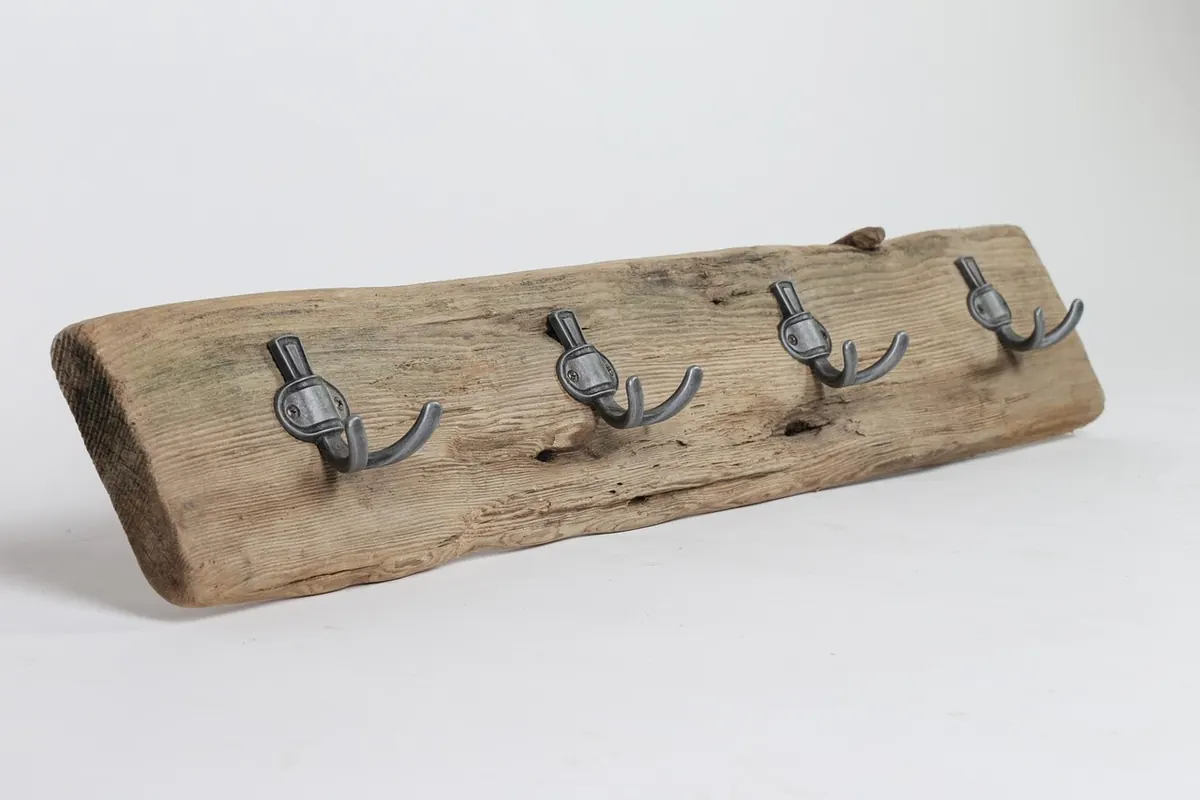
A pine crate turned on its side becomes a shelf for books or kindling. A pine peg rail by the back door gives scarves and dog leads somewhere to live. A plain pine table takes a linen runner, a stoneware jug and a bowl of apples without any further decorating at all.
Then there are the cones and cuttings. Gather them on a walk and let them dry on a radiator for a day or two — pine cones open as they dry, so they will spread out and fill a bowl far more generously than they did in the hedge. A handful under a glass cloche is autumn in its simplest form.
Wire, Tin and Iron for an Honest Edge
Wire is what stops rustic decorating turning pretty. A galvanised basket full of logs beside the fire, a wire egg basket holding fruit, a wall grid with a few dried stems tucked into it — all of these add a bit of grit that wood and wool alone cannot manage.
Keep the metals simple and mix them sparingly. Black iron and dull galvanised steel sit well together; shiny chrome fights with both. Jam jars hung in wire holders make good lanterns, and a wire basket by the door is the best place for keys, post and loose change.
Indoors, keep wire dry. Bare metal that stays damp will mark a painted sill or a wooden table, so stand anything on furniture on a cork mat or a scrap of leather.
The Twelve-Point Autumn Checklist
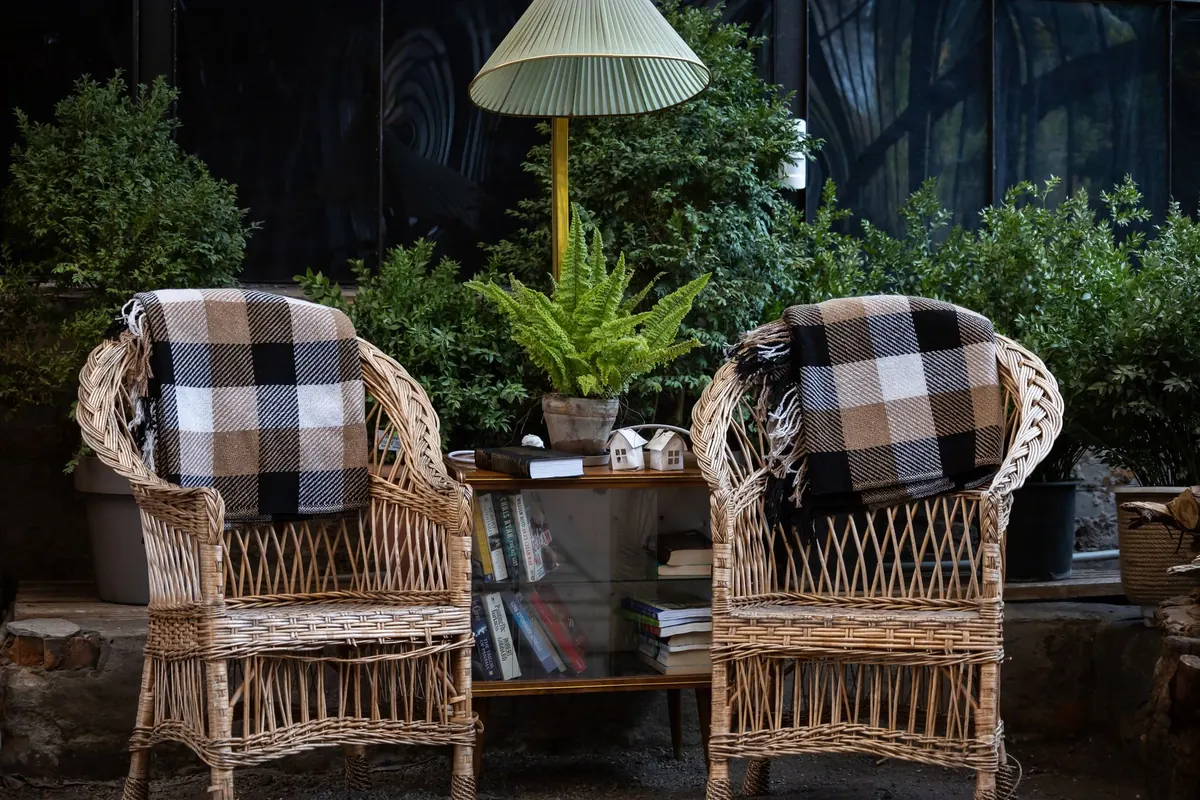
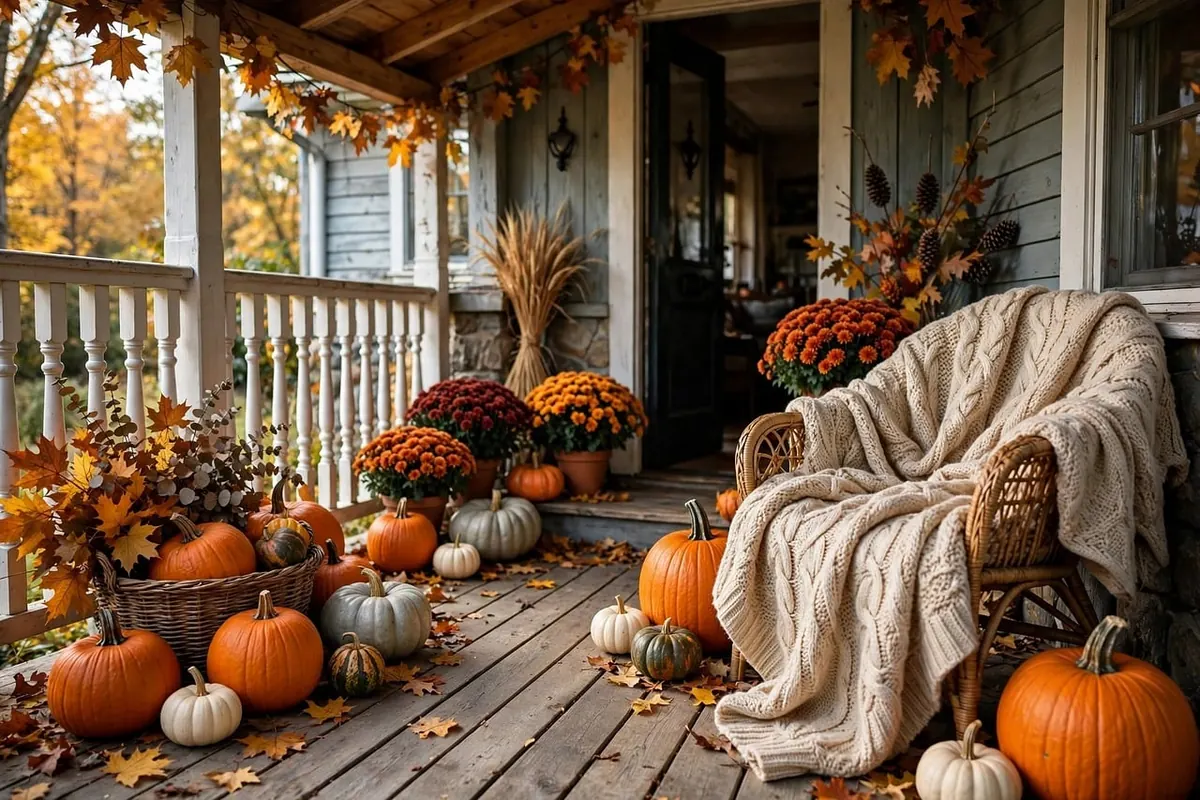
- Fold a wool throw over the back of a chair or into a basket beside it, where it will actually be used.
- Change the cushions to wool, tweed or corduroy in your three chosen tones.
- Fill a shallow bowl with pine cones, dried on a radiator first so they open properly.
- Dry some stems — hydrangea, seed heads, grasses — and stand them in an earthenware jug rather than a glass vase.
- Put a wire basket of logs next to the fire or stove, with kindling in a smaller one beside it.
- Add two or three lanterns with beeswax candles, sized so they look intentional rather than scattered.
- Bring wooden boards and bowls out of the cupboard and leave them on the worktop instead of hidden away.
- Turn a pine crate on its side for books, boots, kindling or a stack of magazines.
- Warm the light with a couple of low-wattage bulbs or an extra lamp in the corner of the room.
- Hang a peg rail near the back door and let scarves, hats and leads pile up on it.
- Swap in stoneware in the kitchen: mugs, jugs, a linen tea towel on the rail.
- Simmer orange peel and a cinnamon stick in a pan of water for scent, and stay in the kitchen while it bubbles.
Make It Last Until the Christmas Tree Arrives
The best autumn pieces bridge the whole season. Pine, wire, wool, brass, dried oranges and plain stoneware all carry through Halloween, Bonfire Night and the darker weeks that follow, so you can add and subtract without starting again in November.
Keep a paper bag or a lidded box for dried stems and cones, and shake blankets out before they go into storage. Refresh an arrangement every few weeks with one new thing from a walk or a market rather than replacing it wholesale.
And if a surface starts to look busy, take one thing away rather than adding another. Rustic decorating goes wrong when it fills every flat space; the bare patch of pine or plaster is doing as much work as the bowl of cones sitting on it. Never leave candles burning unattended, and keep dried arrangements well away from them.