Every home has one: the corner that has quietly become a home for a dying houseplant and a stack of unopened post. Give it a chair, a warm bulb and a few honest materials, and it becomes the seat everyone argues over. A proper reading nook is rarely about spending much. It is about light falling in the right place, textiles you want to touch, and somewhere within reach to set down a mug.
Choose the Corner Before the Chair
Start with position. The best nooks sit slightly away from the main flow of the room: beside a chimney breast, in the alcove next to a window, or in the shallow space behind a sofa. You want to be out of the draught from the front door but close enough to a radiator that winter evenings are comfortable.
Daylight matters, though not in the way people assume. You do not need a bright window at your shoulder; you need daylight in the room so the corner does not feel like a cave at four o'clock. If your only option faces a busy street, a sheer curtain softens the view without blocking the light.
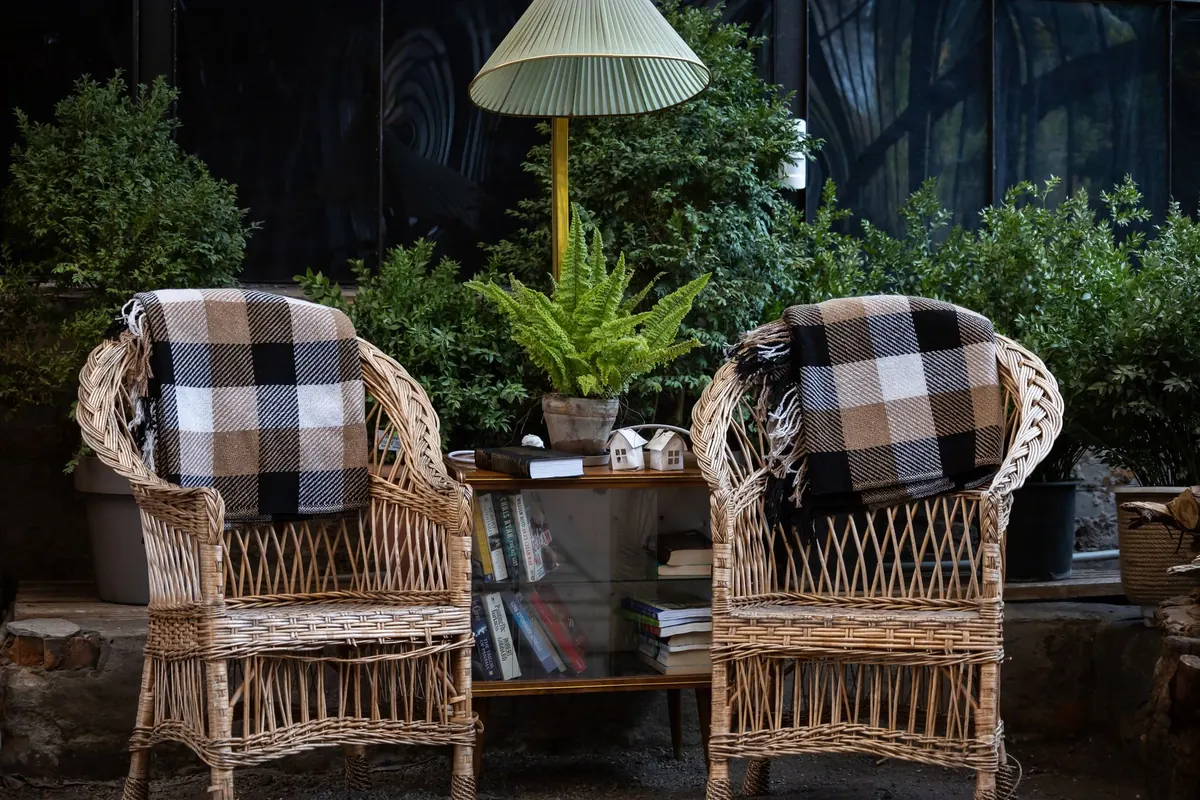
Then the chair. A high-backed armchair, a wing chair or a deep rattan number all work; what matters is that your feet reach the floor, your shoulders are supported and you can stand up without shuffling forward. Test it with a book in hand. If you have to hold the pages up against your chest, the chair is too reclined.
Lighting: Three Layers, All Reachable
One ceiling light will never make a nook feel cosy. It flattens everything and puts the brightest point behind your head. Build three layers instead.
The reading light
A floor lamp or wall light placed just behind and slightly above your shoulder. This is the one that does the work, so choose it for function: a shade that pushes light down onto the page, and a warm white bulb rather than the cooler white used in kitchens and studies. If someone else is watching television, a wall light with a small backplate keeps the pool of light tight and takes up no floor space.
The ambient glow
A small table lamp on a shelf, a candle in a lantern, or a string of warm bulbs along a picture rail. Keep it dim. This layer exists to stop the corners of the room going black, so it should be barely noticeable on its own.
The switch
Lamps you must cross the room to turn off quickly stop being used. Put the floor lamp on a foot switch, plug the table lamp into a switched socket, or use a smart plug so one button kills the lot from the chair. Trailing cables spoil the effect: a fabric-covered flex in a neutral colour looks deliberate where white plastic does not, and a wire basket beside the chair gives the surplus lead somewhere to live.
Throws and Cushions: Layer Your Textures
Rustic style is not the same as rough. The trick is contrast — something chunky against something smooth, something matte against something with a slight sheen. Build a palette from colours you already like: oatmeal, clay, moss, faded denim, charcoal. Then stay inside it.
- A wool or recycled cotton throw over the back of the chair, folded rather than spread flat so it looks used.
- One large cushion for support and one smaller one for looks; two is usually plenty on a single chair.
- Something with a bit of age — a checked blanket, a linen runner over a footstool, a woven basket for magazines.
- A sheepskin or a small rug underfoot if the floor is bare boards. Cold feet end reading sessions early.
Rotate the throw with the seasons rather than buying more. Heavy wool in January, light linen in July, and the same corner feels new twice a year.
Pine Shelving That Earns Its Place
A nook needs horizontal surfaces. Pine is forgiving: affordable, easy to work with, and it ages into a soft honey colour that suits almost any room. Keep shelves shallow — about the depth of a paperback plus a centimetre — so they hold what you need without looming over the chair.
- Fix the shelf so the top sits at shoulder height when you are seated. You should reach a book without standing up.
- Use fixings suited to your wall. Solid brick, plasterboard and lath all need different plugs; if you are unsure which you have, get help rather than guessing.
- Finish with a clear wax or a limed effect rather than a heavy varnish. Pine darkens on its own, and wax keeps the grain visible.
- Style in threes: a row of books, one object, one thing that does a job — a small clock, a candle, a dish for keys.
Mix upright and stacked books, and leave gaps. A shelf with air in it looks considered; a shelf packed tight looks like storage.
Wire Details: The Light Finishing Touch
Wire is what stops rustic rooms turning heavy. Against thick pine and wool, a slim wire basket, a mesh memo board or a cupboard panel in chicken wire adds line and lightness without introducing a new colour.
Use it where it works: a wire basket for magazines beside the chair, a small wire tray for a mug and reading glasses, a wall rack for the current week's papers. If you are handy, swapping a solid cupboard door for a chicken wire panel is a weekend job that transforms a plain pine unit.
Keep anything rusty away from pale fabric. Line old baskets with a piece of linen, or seal the metal, so it cannot mark a throw.
Making It Work Day to Day
Once the corner is set up, keep it usable. A nook that becomes a dumping ground stops being inviting within a fortnight. Five small habits keep it in shape: a coaster within reach, a basket for anything that arrives and needs dealing with, a lamp you can switch off without standing up, a throw folded rather than draped, and a rule that the chair is for sitting in.
Refresh it with the seasons — dried stems in autumn, a scented candle in winter, a lighter throw in summer — and you will keep using it long after the novelty of the arrangement wears off. The best reading corners are not decorated once. They are tended.
Photo: Яна Леоненко / Pexels